
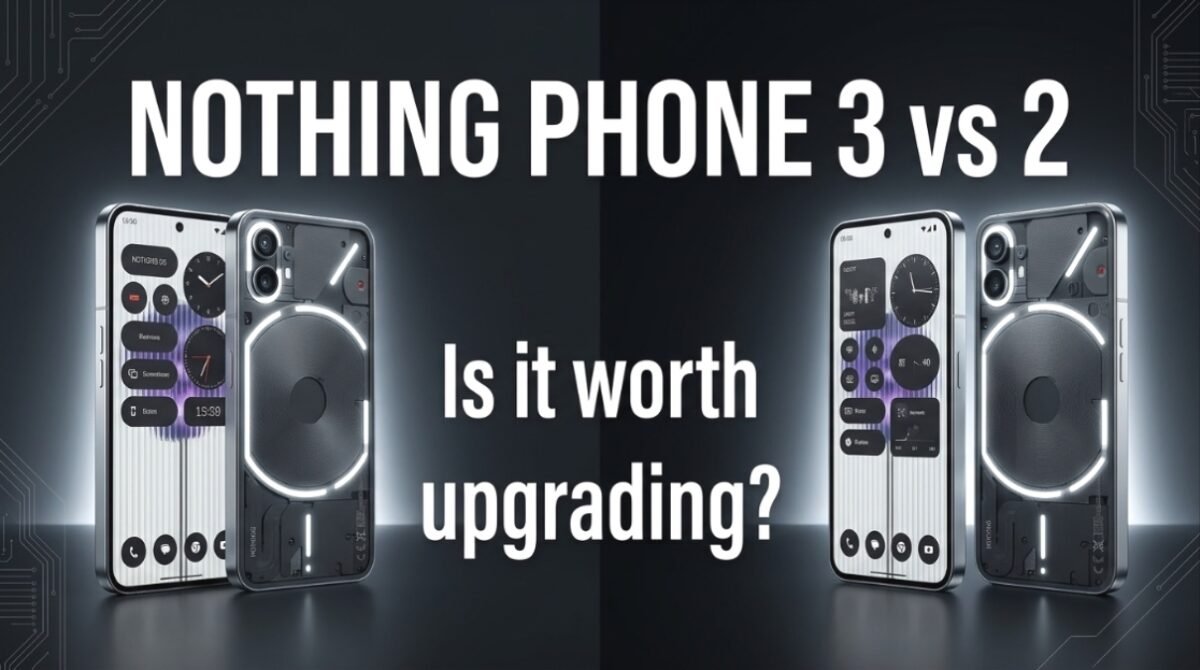
Nothing has always done things differently. Transparent backs, glowing LED lights, and clean software helped the brand build a loyal community of people who wanted something fresh in a market full of identical-looking smartphones. In July 2025, the brand took its biggest step forward yet with the launch of the Phone 3 — its first device officially positioned as a true flagship.
But if you already own the Nothing Phone 2, one question matters more than anything else: Is Nothing’s new Phone 3 actually worth upgrading from Phone 2? In this honest comparison, we break down everything — design, display, performance, software, battery, and price — without hype or brand bias. Just the clear facts you need to make the right decision.
About the Nothing Phone 3
The Nothing Phone 3 was officially unveiled on July 1, 2025, at a launch event held in London, and became available for purchase worldwide from July 15, 2025. It is the brand’s most premium offering to date, arriving in two variants:
• 12GB RAM + 256GB Storage — $799 / £799 / €799
• 16GB RAM + 512GB Storage — $899 / £899 / €899
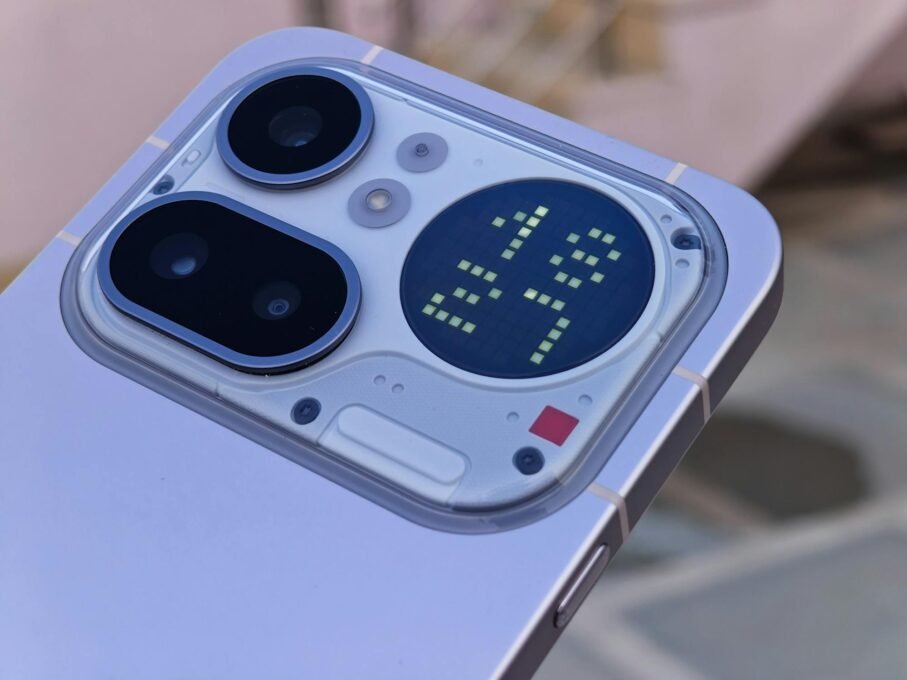
Available in Black and White, the Phone 3 runs Nothing OS 3.5 built on Android 15. It features a triple 50MP rear camera system — including a periscope telephoto lens — a new Glyph Matrix dot-grid display on the back, a large silicon-carbon battery, and a dedicated Essential Key button for productivity. Nothing has committed to providing five years of major Android updates and seven years of security patches, making it the most future-proof phone the brand has ever released.
About the Nothing Phone 2
The Nothing Phone 2 launched in mid-2023 at a starting price of $599. It was a significant milestone for the brand — the first Nothing phone to officially launch in the United States and the model that firmly established Nothing as a serious player in the smartphone market.
Powered by the Snapdragon 8 Plus Gen 1, the Phone 2 offered a 6.7-inch AMOLED display, Nothing’s iconic Glyph LED strips on the back, and a clean Nothing OS 2.0 experience based on Android 13. Even in 2025, the Phone 2 remains a capable everyday device. It has since received a software update to Nothing OS 3.0 and continues to handle browsing, streaming, and daily tasks without any notable slowdown.
Design
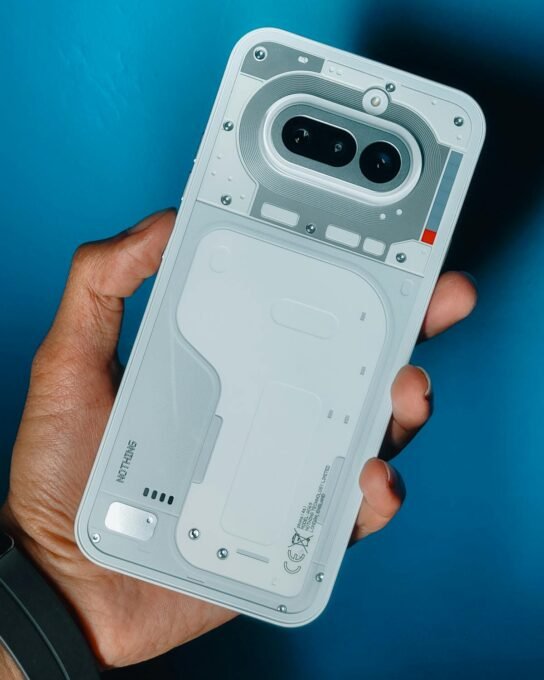
The Phone 2 was defined by clean lines, a symmetrical layout, and the beloved Glyph LED strips running across its transparent back. It looked intentional, minimal, and premium for its price — exactly the aesthetic Nothing fans had come to love.
The Phone 3 takes a completely different direction. The camera module sits off-centre, creating an asymmetric, bold look that leans into a retro-futuristic personality. The most dramatic change is the removal of the classic Glyph strips, replaced by a Glyph Matrix — a 25×25 LED dot grid that can display the time, weather updates, timers, animations, and even mini-games. Users and developers can also create their own interactive Glyph Toys for it.
If you loved the clean, symmetrical Glyph design of the Phone 2, the Phone 3’s direction is a bold shift. If you want something more expressive and interactive, the Phone 3 delivers exactly that.
Display
Both phones use a 6.7-inch AMOLED panel with a 120Hz refresh rate — so on paper they sound similar. In practice, however, the gap is significant.
The Phone 3 features a 1.5K resolution flexible AMOLED panel with a peak brightness of 4,500 nits. The Phone 2 reaches around 1,600 nits at its maximum. That is nearly three times brighter — outdoor visibility on the Phone 3 is in a completely different league, particularly in direct sunlight.
The Phone 3 also brings 2,160Hz PWM dimming for a flicker-free experience, which is particularly beneficial for users with light-sensitive eyes during extended use.
One honest trade-off worth noting: the Phone 2 supported LTPO display technology, which allows the refresh rate to adjust dynamically based on on-screen content to conserve battery. The Phone 3 does not have LTPO. For most users, this difference will be unnoticeable in daily life — but it is worth knowing.
Performance
The Phone 2 is powered by the Snapdragon 8 Plus Gen 1. When it launched in 2023, this was among the strongest chips available. Even in 2025, it handles everyday apps, multitasking, and casual gaming without any meaningful lag.
The Phone 3 runs on the Snapdragon 8s Gen 4 — a current-generation chip that delivers a clear and noticeable performance improvement over the Phone 2 across all tasks. Apps open faster, heavy workloads are handled more smoothly, and gaming performance sees a meaningful step up.
One thing to be transparent about: the top-performing Android phones in 2025 use the Snapdragon 8 Elite, which sits above the 8s Gen 4. So while the Phone 3 is fast and more than sufficient for nearly every user, it is not the absolute peak of mobile performance in 2025. For everyday users, this distinction will rarely — if ever — matter.
Software
The Phone 3 ships with Nothing OS 3.5, built on Android 15. It is a clean, bloat-free experience with smart AI tools including voice recording, real-time transcription, and the new Essential Space — a productivity hub accessible through a dedicated physical button on the side of the phone.
The Phone 2 has been updated to Nothing OS 3.0, which meaningfully closes the software experience gap between the two devices in 2025. However, the Phone 2 is only guaranteed to receive updates as far as Nothing OS 4, while the Phone 3 is on course to eventually reach Nothing OS 8. For anyone planning to keep their phone for three or more years, the Phone 3 wins this category decisively.
Battery
The Phone 3 is equipped with a 5,150mAh silicon-carbon battery (5,500mAh in India), paired with 65W wired fast charging and 15W wireless charging. In real-world use, it comfortably lasts a full day for heavy users and can stretch to two days for those with lighter habits. The 65W charger brings the phone from empty to fully charged in roughly one hour.
The Phone 2 carries a 4,700mAh battery with 45W wired charging. Thanks partly to its LTPO display, most Phone 2 users find themselves ending the day with 35 to 50 percent charge still remaining. That said, the Phone 3 offers more raw capacity and notably faster charging speeds, giving it a clear advantage for heavier users.
Full Specs Comparison
| Feature | Nothing Phone 2 | Nothing Phone 3 |
| Launch Date | Mid-2023 | July 15, 2025 |
| Display Size | 6.7-inch AMOLED | 6.67-inch AMOLED |
| Resolution | FHD+ | 1.5K (2800×1260) |
| Peak Brightness | 1,600 nits | 4,500 nits |
| LTPO Display | Yes | No |
| Chipset | Snapdragon 8 Plus Gen 1 | Snapdragon 8s Gen 4 |
| RAM | Up to 12GB | 12GB / 16GB |
| Storage | Up to 512GB | 256GB / 512GB |
| Rear Camera | Dual 50MP | Triple 50MP (with Periscope) |
| Front Camera | 32MP | 50MP |
| Battery | 4,700mAh | 5,150mAh |
| Wired Charging | 45W | 65W |
| Wireless Charging | No | 15W |
| Glyph Interface | LED Strips | Glyph Matrix (25×25 grid) |
| OS at Launch | Nothing OS 2.0 (Android 13) | Nothing OS 3.5 (Android 15) |
| Current OS | Nothing OS 3.0 | Nothing OS 3.5 |
| Software Support | Up to Nothing OS 4 | Up to Nothing OS 8 |
| Starting Price | $599 (now lower used) | $799 |
Price
The Nothing Phone 3 starts at $799 — a full $200 more than the Phone 2 at its original launch price of $599. Since the Phone 2 is no longer sold through Nothing’s official store, it can now be found at significantly reduced prices through third-party retailers and the used market, making the price gap even wider in 2025.
Whether that gap feels justified depends entirely on what you value. The Phone 3 brings a meaningfully brighter display, a more capable camera system, faster charging, longer software support, and a more interactive design. For first-time Nothing buyers in 2025, that premium is easy to justify. For existing Phone 2 owners, it is a more personal decision.
Is Nothing’s New Phone 3 Worth Upgrading From Phone 2?
This is the honest answer — and it is not a simple yes or no.
If you are a current Phone 2 owner:
Your phone still works well, runs updated software, and handles everything most people need without issue. Unless the significantly brighter display, triple camera system, faster 65W charging, or the new Glyph Matrix genuinely excites you — there is no urgent reason to upgrade right now. The Phone 2 still has life in it.
If you are buying a Nothing phone for the first time in 2025:
The Phone 3 is the clear and obvious choice. Better hardware, a much longer software support window, and a more future-proof device overall. Do not settle for the older model unless budget is the deciding factor.
If budget is your priority:
The Phone 2 at its current reduced market price is still an excellent smartphone. It performs well, looks premium, and delivers the core Nothing experience at a fraction of the Phone 3’s cost. If saving money matters more than the latest specs, the Phone 2 remains a smart buy.
Frequently Asked Questions
Q: When did the Nothing Phone 3 officially launch?
A: The Nothing Phone 3 was announced on July 1, 2025, in London, and became available for general purchase from July 15, 2025.
Q: Is the Nothing Phone 3 a true flagship?
A: Nothing markets it as their first true flagship smartphone. It uses the Snapdragon 8s Gen 4 rather than the top-tier Snapdragon 8 Elite, placing it just below the absolute peak of flagship performance — but for the vast majority of users, this distinction will never matter in daily use.
Q: Does the Phone 3 have a significantly better camera than the Phone 2?
A: Yes. The Phone 3 features a triple 50MP camera system, including a periscope telephoto lens with 3x optical zoom. The Phone 2 had a dual camera setup without a dedicated telephoto lens, making the Phone 3 a notable step forward for photography.
Q: Is the Nothing Phone 2 still worth buying in 2025?
A: Yes, particularly at its current discounted price. It performs well, has been updated to Nothing OS 3.0, and delivers a premium experience for everyday tasks. It is a strong option for budget-conscious buyers.
Q: What happened to the Glyph LED strips on the Phone 3?
A: The classic Glyph LED strips have been replaced by the Glyph Matrix — a 25×25 LED dot-grid display on the back of the phone that can show animations, the time, weather updates, and interactive mini-games called Glyph Toys.
Q: How long will the Nothing Phone 3 receive software updates?
A: Nothing has committed to five years of major Android OS updates and seven years of security patches — the longest software support policy the company has ever offered on any device.
Q: Does the Nothing Phone 3 support wireless charging?
A: Yes. The Phone 3 supports 15W wireless charging, along with 65W wired fast charging and 5W reverse wireless charging for compatible accessories. The Phone 2 did not support wireless charging.
Conclusion
The Nothing Phone 3 represents a genuine and meaningful upgrade over the Phone 2 in almost every measurable area. The display is dramatically brighter, the camera system is more capable, charging is faster, the battery is larger, and the software support window is far longer. For a brand that started as a mid-range challenger, the Phone 3 signals a confident step into flagship territory.
That said, the Phone 2 is far from obsolete. It continues to perform well in 2025, runs updated software, and remains one of the best-value premium Android phones available at its current reduced price point.
Is Nothing’s new Phone 3 worth upgrading from Phone 2? If you are buying fresh in 2025 — yes, without hesitation. If you already own the Phone 2 and it is running well — the upgrade is worthwhile but not urgent. Either way, Nothing continues to deliver some of the most distinctive and thoughtfully designed smartphones in the market today.
If you enjoyed this comparison, feel free to explore more of my smartphone reviews and tech comparisons. You might find exactly what you are looking for.